Range Installation Guide: Slide-In, Drop-In, Gas, and Electric
A professional installer's guide to range installation — gas line safety, propane conversion, drop-in vs. slide-in, the tape trick for orifice swaps, and how to not bend a copper gas line on demo.
🧰 Tools & Materials Needed:
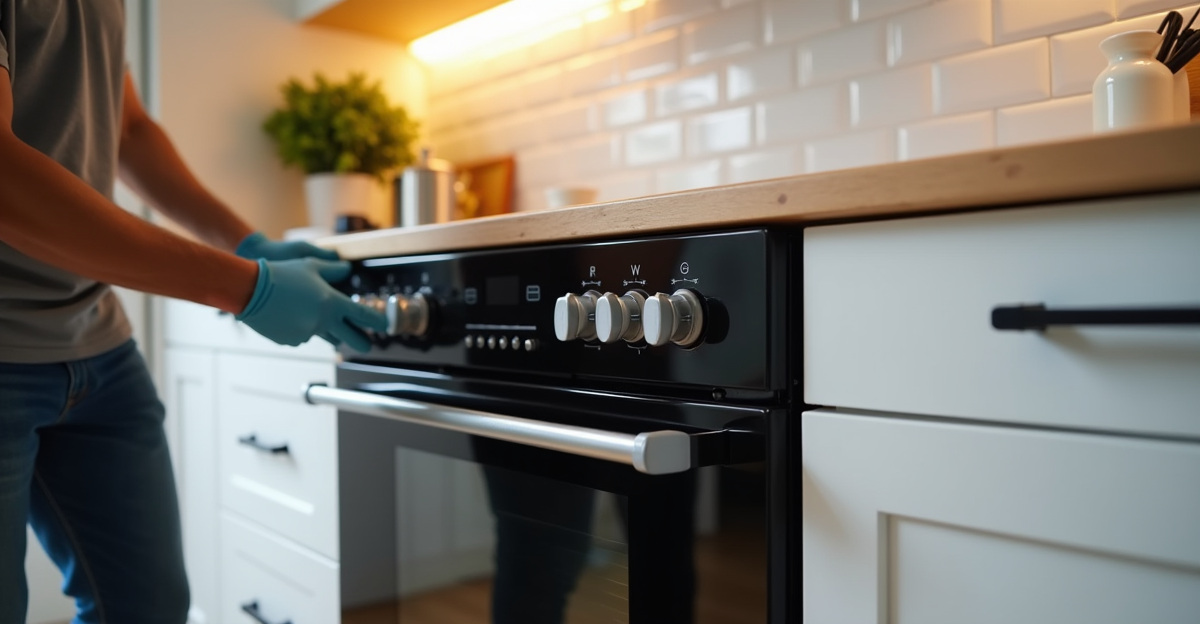
Range Installation Guide: Slide-In, Drop-In, Gas, and Electric
Ranges look like the easiest appliance swap. Disconnect, slide out, slide in, done. And for an electric slide-in, that’s mostly true. But there are a few ways this job goes badly — a bent gas line that creates a leak, a dropped orifice you can’t get back out, a drop-in that won’t accept a standard 30-inch replacement without cutting. This guide covers all of it.
Open the New Unit First
Before you touch the old range, open the new one and inspect it. Check for shipping damage — cracked glass, dented body, broken burner grate, any issue with the door. Go through the paperwork and check if it’s configured for natural gas or propane, and whether it comes with a conversion kit if you need to switch.
Do this before you demo anything. If there’s a problem with the new unit, you want to know while the old one is still in place.
Lighten the Load
Ranges are heavy. Before you move anything, strip the old unit down:
- All burner grates and burner caps
- All knobs
- The oven door — most lift straight off the hinges when opened to the first stop position
- The storage or warming drawer at the bottom
- Anything stored in the drawer
That can take 20-30 pounds off the unit before you start moving it. On a gas range with a cast-iron grate setup, the grates alone can be 15 pounds. Take them off.
Slide-In Range Removal
Open the oven door and put your hand under the front edge of the cooktop to get a grip. Lift slightly and ease the range forward — just enough to see behind it before committing to pulling it all the way out.
Check underneath as it moves. Some older kitchens have vinyl flooring that’s fragile near the cutout, or a bottom board that isn’t fully secured. The plastic feet on ranges are supposed to protect the floor, but they’re not perfect. If the floor looks questionable, put something down — a piece of cardboard, a thin mat — in front of the opening before you slide.
Gas Ranges: Look Behind Before You Pull
This is the one that gets people in trouble. Pull out a gas range without looking first and you might be yanking on a copper gas line that runs directly to the range — all the way from the wall, piped tight to the back of the unit. Yank that hard enough and you’ll bend it. A kinked or cracked copper gas line is a gas leak.
Before you pull a gas range more than a few inches, stop and look behind it. A flashlight helps. You’re looking for how the gas supply line is routed — is there a flexible stainless connector with some slack in it, or is there rigid copper that’s run tight to the back of the appliance?
If it’s a flexible connector with slack, you’ve got room to work. If it’s rigid copper piped tight, move slowly and carefully as you pull the range away from the wall — you need to work within the length of that line. The shutoff valve is usually at the wall behind the range or under the floor. Turn it off before you go further.
For all gas connections — when disconnecting the supply line, put one hand on the fitting or shutoff valve to stabilize it while the other hand works the wrench. Work slowly. Wiggle the line slightly as you loosen the nut. You want to know whether there’s tension in the line before you apply more force.
Slide-In Electric: Check the Mount First
Most electric slide-in ranges are secured in one of two ways. Some just sit in the opening — no fasteners at all. Others are screwed through brackets to the sides of the countertop opening. Before you pull, open the drawer at the bottom and check for screws going into the sides of the cutout, or look along the front face of the range where it meets the countertop. On older units especially, someone may have added their own fasteners.
Get those out first, then slide the range forward.
Outlet types: Electric slide-ins are plugged in, not hardwired. The outlet should be at the rear of the opening — a 4-prong 14-50R or 3-prong 10-50R depending on the age of the home. The cord on the new range may need to be reconfigured to match (most new ranges ship with a 4-prong cord but include adapter instructions). Check the outlets before you order.
Drop-Ins: Always Hardwired
Drop-in ranges are a different animal. They sit in a countertop cutout and are hardwired to a junction box — there’s no plug. To remove one, you need to:
- Lift the front edge and look underneath for mounting screws — they’re usually screwing up into the countertop from below, or inward from the sides of the cutout
- Once mounting screws are out, the range can lift up and out
- Disconnect the power from the junction box before pulling it clear
Converting a drop-in to a slide-in is something I recommend when it makes sense. Drop-in openings are often 29½ inches wide — because the old drop-in was designed to hang on the countertop edge, not sit flat. Standard slide-in ranges are 30 inches wide. So if you’re swapping a drop-in for a new slide-in, the opening almost always needs to be cut wider. Even if you’re buying the same size, the fit specs are different. Budget for countertop cutting if you’re making this switch.
Hand Truck for the Move
Use a hand truck for ranges. Don’t try to carry one out by yourself — they’re awkward, heavy, and there’s almost always a door, a step, or a tight turn involved. Tip the old range back onto the hand truck, strap it, wheel it out. Same for the new unit going in.
Have the customer clean up the area behind the opening once the old range is out — grease, debris, whatever’s accumulated back there. That’s their territory, not something I deal with.
Installing the New Range
Set the Feet First
Adjust the leveling feet before the range goes in. It’s much easier to set the height and level when the unit is standing in front of you than when it’s buried in an opening. Set all four feet to roughly the right height, check that they’re even, then fine-tune once it’s in place.
Electric Slide-In
Route the cord through the opening to the outlet at the rear. Slide the range in. Level it — side-to-side and front-to-back. Plug it in. That’s most of it. The main things that can go wrong: wrong outlet type, undersized circuit, or a crooked install because nobody touched the feet.
Gas: Natural Gas vs. Propane
Every residential range ships configured for natural gas. If you have propane, you have to convert it. This is not optional and it’s not just about the regulator — the orifices (the small brass fittings that control gas flow at each burner) are sized differently for LP and natural gas. LP orifices are smaller because propane burns at higher pressure.
The conversion kit should come with the range. If it doesn’t, stop and get the correct kit for that model before you continue. Running an unconverted natural gas range on propane will produce massive, dangerous flames. Running an unconverted propane range on natural gas produces a weak flame and incomplete combustion. Neither is acceptable.
The Orifice Swap — and the Tape Trick
Converting the orifices means removing each burner from the cooktop and swapping the small brass fitting at the base. The instructions will show you which orifice goes where and what the markings mean — LP and natural gas orifices have different numbers stamped on them. Don’t mix them up.
Here’s what I do to keep from dropping an orifice into the burner box: I wrap a small piece of electrical tape around the tip of the socket I’m using to unscrew the orifice fitting. The tape gives the socket just enough grip to hold the orifice as it comes out, so it doesn’t fall down into the range body. If it drops in, you’re looking at removing the entire cooktop assembly to fish it out — that’s a significant amount of extra work. The tape trick takes five seconds and prevents all of that.
Once all burner orifices are swapped, check each one against the conversion chart in the instructions before reassembling.
Don’t Forget the Regulator
The gas pressure regulator is a separate conversion step. It’s usually a cylindrical fitting on the gas inlet at the back or bottom of the range. To convert it: remove the cap, flip or rotate the internal valve body according to the instructions, and replace the cap. The instructions will show exactly how — it’s specific to each model, but the principle is the same. Missing this step and the range will either not light or will have pressure problems even after the orifices are correct.
Gas Thread Sealant
For all gas connections, I use a thread sealant compound — sometimes called pipe dope. Get one rated for gas and water (yellow PTFE tape works too, but I prefer the compound for threaded fittings). Apply it to all the male threads of every gas fitting you make. I put enough on to fully fill the threads — I don’t skimp on it. Thread sealant is cheap. A gas leak is not.
Tighten everything up, then test for leaks with soapy water — brush it on every joint and connection you made, then slowly turn the gas back on. Bubbles = leak. No bubbles, you’re good. Run this test every time, no exceptions.
Slide It In and Level
Route the gas supply line or power cord through the rear of the opening. Slide the range in. Level it side-to-side and make sure the front is flush with the surrounding cabinetry. On gas, plug in the ignitor cord (usually a standard 120V plug) and light each burner to confirm they all ignite cleanly and hold a steady flame.
Drop-In Final Connection
For drop-in installs, hardwire the range to the junction box, secure the mounting screws into the countertop, and confirm everything is flush and level. Make sure the cutout edges are sealed if required by the countertop material.
What I Handle and What I Don’t
My scope on range installs is the existing gas shutoff to the range, and the existing outlet to the range. I’m not running new gas lines, relocating shutoff valves, upgrading electrical panels, or installing new 240V circuits. If the existing infrastructure isn’t in shape for the new range, those pieces need to be handled by a licensed plumber or electrician first.
Propane conversions are included when they’re a standard orifice-and-regulator swap using the kit that comes with the range. If the range doesn’t come with a conversion kit, that needs to be sourced before the install date.
When to Call a Pro
Straightforward electric slide-in swap in good shape? Manageable DIY if you’re comfortable with basic electrical work and have the right outlet.
Call a pro when:
- It’s a gas range and you’ve never worked with gas lines
- You need to do a propane conversion and aren’t confident with orifice swaps
- The existing outlet is wrong type or the circuit is undersized
- You’re swapping a drop-in and need the countertop cut
- The old range is a drop-in hardwired unit and you’re not comfortable with the junction box disconnect
If you’re in Macon, Milledgeville, Perry, or middle Georgia and want a pro to handle it, I do gas and electric range installs for a flat rate through Pro Appliance Installs.
Pro Install Guy is your local appliance installation specialist serving Macon, Milledgeville, Perry, and middle Georgia. Book an install at proapplianceinstalls.com or call (478) 280-4099.