Refrigerator Installation Guide: Water Line, Level, and Clearance
How to install a refrigerator the right way — ice maker water line, leveling so the door closes itself, clearance requirements, and what to check after install.
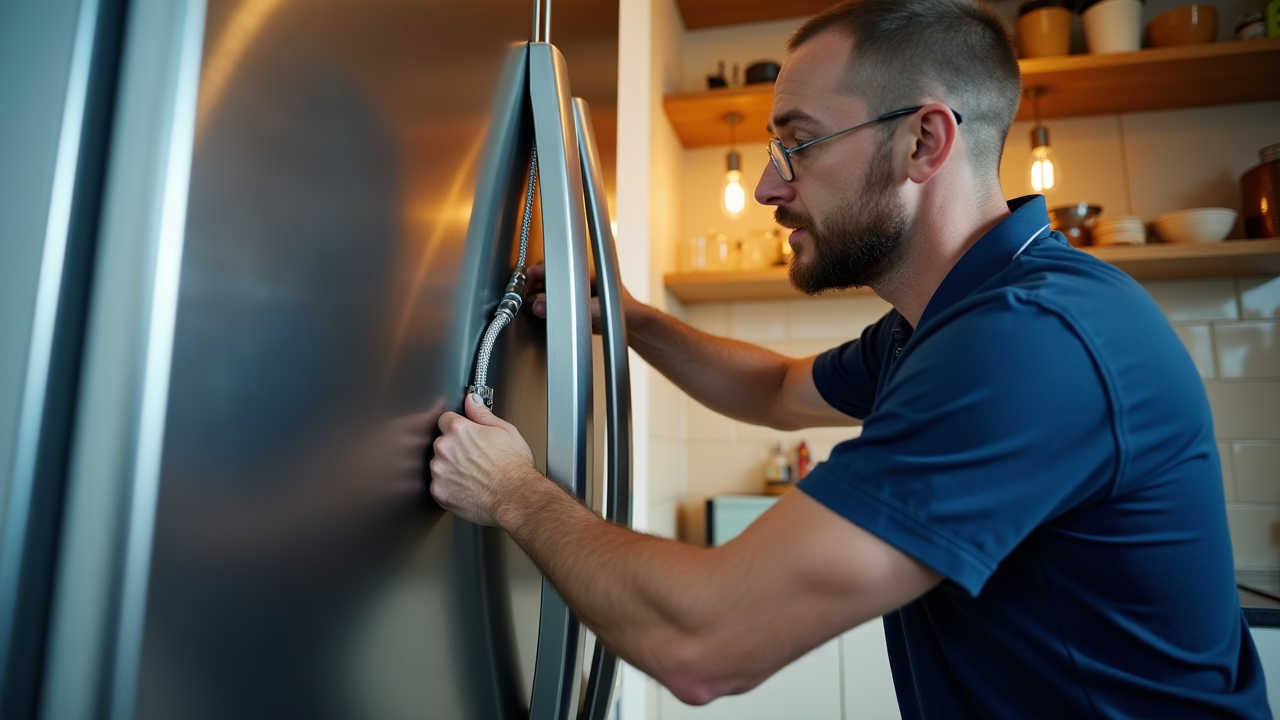
Refrigerator Installation Guide: Water Line, Level, and Clearance
Most people think refrigerator installation is the easy one. Pull the old fridge out, slide the new one in, plug it in, done. And sometimes it is that simple — if there’s no water line, no ice maker, and the space was already sized right. But that’s maybe one in four jobs. The rest have something that needs attention.
I’ve done enough of these that I can walk in, take a look, and tell you in about two minutes what we’re dealing with. This guide walks through my actual process — what I check, what I do, and what problems I look for before the new appliance ever gets near the opening.
Before the New Fridge Arrives: Check the Space
The number one problem I see on refrigerator jobs is a fridge that doesn’t fit. Not just the opening — the path to get it there.
Measure the door of your kitchen. Then measure the hallway. Then measure the opening. In order. A lot of homes in middle Georgia were built with 30-inch interior doors, and French door refrigerators are 36 inches wide at the handles. The fridge will fit in the space but it won’t fit through the door. We figure that out after delivery, which means we’re removing the doors off the refrigerator, and sometimes the doors off the kitchen doorway.
Here’s what to measure before the truck shows up:
- Opening width — measure at the tightest point, usually the countertop edge
- Opening height — don’t forget the cabinet above or any overhead lighting
- Opening depth — counter-depth vs. standard depth matters here
- Door width on the path in — every doorway the appliance has to pass through
- Door swing clearance — can the refrigerator door open fully when the appliance is in place?
On counter-depth models, the fridge door handles still often stick out past the counter edge. That affects whether the door across from it (pantry, oven door, etc.) can open without hitting it.
Clearing the Old Refrigerator
Before I move the old fridge, I turn off the water supply to the ice maker. That shutoff valve is usually:
- Under the sink (small valve on the cold water line, with a small copper or plastic tube running toward the refrigerator)
- Behind the refrigerator (some homes have a box valve in the wall behind the unit)
If there’s no shutoff valve — if someone ran the water line without installing a valve, or if the valve is stuck and won’t close — stop here. That’s a plumber job. I’m not turning off the main house water to swap a refrigerator. That’s not my scope.
Once the water is off, I disconnect the supply line at the back of the fridge. Old plastic or copper lines I always replace — never reuse them. They get brittle, they develop pinhole leaks, and the first time you get one of those behind a refrigerator it’s usually months before you notice.
Pull the old fridge straight out. Don’t angle it — you’ll catch the floor. If the wheels are stuck, tilt it slightly and set a piece of cardboard or a moving blanket under the front feet so it slides.
The Water Line: What I Always Install
Every refrigerator with an ice maker or water dispenser gets a new steel-braided supply line. I don’t care if the old plastic one looks fine. Plastic lines fail. They dry out, they crack at the ferrule, they get pinched behind the fridge and you never notice until there’s water damage.
Steel-braided lines come in various lengths — usually 6 or 8 feet for a refrigerator. Measure from the shutoff valve to the back of where the fridge will sit, add some slack so the fridge can roll out for service, and get the right length.
The connection at the wall shutoff is usually a compression fitting (1/4-inch OD tube) or a push-fit quick-connect. The connection at the fridge is typically the same. Don’t overtighten the compression fitting — finger tight plus about a quarter turn with pliers is right. More than that and you’ll crack the ferrule.
Shutoff valve is what I always look for first. If the valve is old, if it’s never been touched in 20 years, sometimes just closing it can cause it to fail — the seat deteriorates. If I see an old gate valve or a valve that’s clearly corroded, I flag it. That’s a conversation to have before we’re committed to a disconnected line.
Sliding the New Refrigerator Into Place
Level the old water line hookup point first — don’t slide the fridge all the way in before you connect the water. You’ll be crawling behind it with zero room to work.
Here’s the sequence I use:
- Pull the fridge near the opening
- Connect the water supply line to the back of the fridge
- Hand-tighten the connection at the shutoff valve — don’t fully tighten yet
- Carefully slide the fridge into the opening, leaving enough gap to reach the wall valve
- Tighten the wall connection
- Turn the water on slowly and check for drips at both ends of the line
Then push the fridge the rest of the way in, but not all the way — leave about an inch of gap from the wall. The supply line needs clearance and you don’t want to kink it.
Leveling: The One Thing Everyone Skips
Every refrigerator has adjustable front feet. Most people ignore them.
Here’s why leveling matters: if the fridge is leaning forward even slightly, the doors won’t stay closed. They’ll swing open on their own, or they won’t seal properly when you push them shut. Over time, a door that’s slightly ajar ruins your compressor efficiency and lets humidity in.
The correct level for a refrigerator is slightly tilted back — not perfectly level. Raise the front feet until the front is about 1/4 to 1/2 inch higher than the back. This lets gravity close the doors.
The front feet are usually adjusted with a wrench or pliers — they thread up and down. Some models have anti-tip feet in the back that you can’t adjust. Set the front ones, then check the doors. French door models: both doors should swing closed from about 30 degrees open. Single door models same. If one door doesn’t close right, check if the fridge is level side-to-side too — a refrigerator tilted slightly to one side will throw off the door seal on that side.
Clearance Requirements
Refrigerators need breathing room to run efficiently. The compressor and coils need airflow or the unit runs hot and works harder than it should.
General clearance rules:
- Sides: 1/8 inch minimum per side (built-in look), 1 inch per side is better for airflow
- Back: at least 1 inch from the wall — more is better (the compressor coils are back there)
- Top: at least 1 inch above the unit if there’s a cabinet above
Counter-depth refrigerators are designed to be nearly flush with the counter, so side clearance is minimal by design — just make sure the back isn’t flat against the wall.
French door and bottom-freezer models also need door swing clearance in front. The refrigerator door on a French door model needs about 2 inches of clearance past the door opening edge to swing 90 degrees. If you don’t have that, you’ll be fighting the door every time you load groceries.
After Install: What I Check Before I Leave
I never leave a refrigerator job without checking these:
Water dispenser — cycle it about 10-15 times after connecting the water line. The first several cups will be air and then discolored water from the new line. Let it run until it’s clear.
Ice maker — turn it on and wait. Ice won’t drop for a few hours. I always check that the ice maker arm is in the down position (on models that have one) and that the water fill tube is pointing into the ice tray correctly.
Water connections — check both ends of the supply line with my hand after everything is pressurized. If there’s a drip, I find it now rather than three months from now when there’s water damage behind the fridge.
Door seals — close both doors and run your hand around the perimeter. You should feel no air movement. On French door models, press where the two doors meet in the middle — the magnetic seal in the center gasket should grab firmly.
Temperature — set to 37°F for the fridge section, 0°F for the freezer. It’ll take a few hours to come down to temp. Don’t load it full for at least 2 hours.
When to Call Someone
A refrigerator install is within most handy homeowners’ reach IF there’s an existing shutoff valve, the existing supply line is accessible, and the space is already sized right.
Call me if:
- There’s no shutoff valve (plumber installs it first, then I do the hookup)
- The opening is wrong and the cabinet needs modification
- The water line runs through the floor or wall and you’re not sure where it goes
- Something leaks and you can’t find the source
I serve Milledgeville and Macon, GA. If you’re in middle Georgia and need a refrigerator set up right — water line, level, no leaks — call me at (478) 280-4099 or book online at proapplianceinstalls.com.