Wall Oven Installation: What Every Homeowner Should Know Before the Swap
A professional installer's honest guide to wall oven replacement — how to measure the cutout correctly, the tabletop jack technique, electrical, cord routing, and why the face size doesn't matter.
🧰 Tools & Materials Needed:
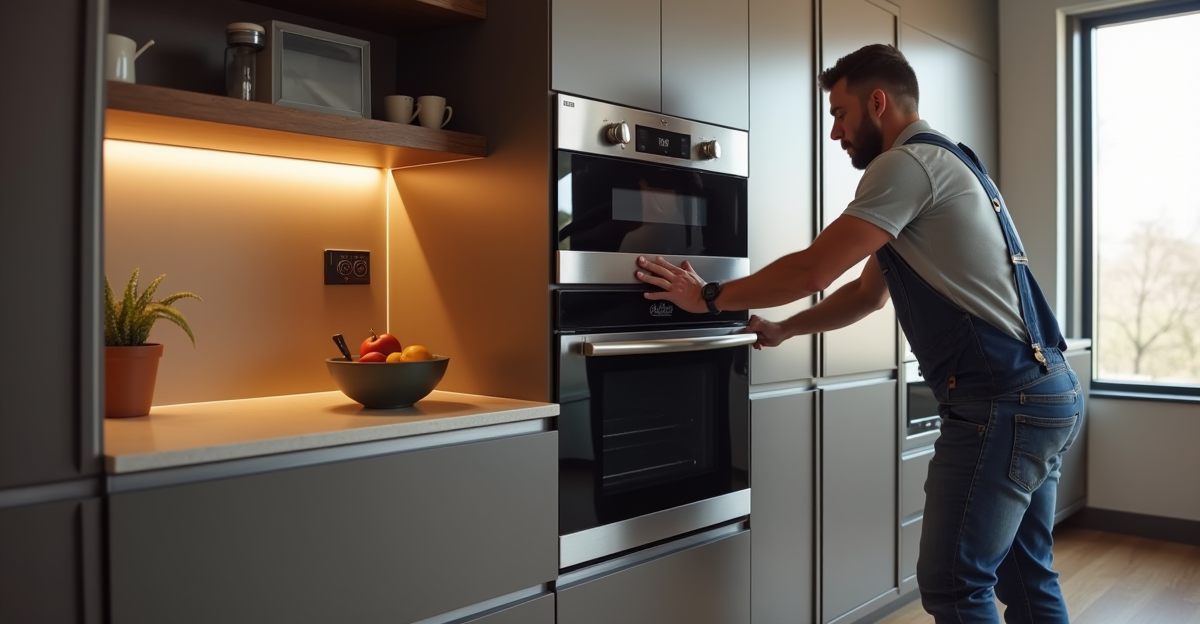
Wall Oven Installation: What Every Homeowner Should Know Before the Swap
Wall ovens are one of the trickier installs — not because the electrical is complicated, but because getting the sizing right requires more work than most people expect, and moving a 100+ pound appliance in and out of a cabinet opening requires the right tools and technique. This is how I approach it.
The Sizing Problem: Don’t Measure the Face
The number one mistake on wall oven replacements is measuring the face of the old oven and ordering a new one based on that number.
Wall ovens are sold by category — “27-inch” or “30-inch” — but that label is approximate. The actual cabinet cutout dimension is what matters, and it varies by manufacturer and model year. A lot of older homes have custom or non-standard cutouts, and the sizes that manufacturers used decades ago don’t always match what’s available today.
Here’s how to get the actual cutout dimensions: Unscrew the mounting screws that hold the oven in the cabinet and slide the oven out a few inches. Now measure the actual cutout — the width and the height of the opening in the cabinet, not the oven body. Write those down.
Then look up the specific model you’re considering at the retailer. On Lowe’s product pages, scroll to the bottom — there’s usually a Dimensions PDF or similar spec document. That document shows you exactly what the cabinet cutout needs to be for that model. Compare your actual cutout measurements against that spec.
You’re checking three things:
- Will it fit width-wise with minimal gap?
- Will it clear the top — meaning it won’t hit the cabinet door or frame at the top of the opening?
- Is there enough depth in the cabinet cavity for the oven to seat fully?
If the dimensions work, you’re good to order. If they’re close but off by a little, you may be able to trim the opening. If they’re significantly off, you’re looking at a cabinet modification job that needs to happen before the install.
Trimming the Opening
If the cutout needs to be widened slightly, I use an oscillating tool to trim the sides. It has to be done carefully and kept straight — an uneven cut can create gaps that look bad or affect the fit of the oven’s trim frame. This is something I charge extra for, and there’s a reason. If it’s more than trimming — if it requires actual cabinet work or structural changes — that’s a different project.
Electrical First
Wall ovens run on 240V and are hardwired — not plugged in. They’re on a double breaker (typically 30-40 amp). Before you start, locate that breaker and kill it.
Same approach as any hardwired appliance: take the cover off the junction box, get your non-contact voltage tester on the wires, and confirm it’s dead before you touch anything. Don’t guess. Test it twice.
The power cord on wall ovens often has limited slack, and routing it can be tight once the oven is out of the opening. Keep that in mind — you may need to extend the wire or reroute it during the reinstall.
The Tool That Makes Wall Oven Installs Possible: The Tabletop Jack
A tabletop jack (the one I use is from Harbor Freight — inexpensive and invaluable) is what makes wall oven removal and installation safe to do without a second person. If you’re attempting this yourself, get one before you start. Trying to muscle a 100+ pound wall oven in and out of a chest-height opening without one is how appliances and backs get destroyed.
Before you pull the oven, lay a moving blanket on the kitchen floor somewhere between the oven location and the exit path. You’ll be setting the oven down on it, so position it where it won’t be in your way.
Removing the Old Wall Oven
Lighten it up first. Pull the oven racks out. Remove the door if it lifts off the hinges — most single wall oven doors do, which takes 20-30 pounds off immediately. Remove drawers and storage below the oven if they’re separate.
Roll the tabletop jack to the oven and position it sideways, just below the oven face. Jack it up until the platform is just barely under the bottom of the oven.
Slide the oven forward a few inches out of the opening. The jack starts to take the weight. Watch the power cord as it comes out — it can get caught behind the oven or in the adjacent cabinet. On some installations, the cord routes through the floor of the cabinet drawer below. If that’s the case, you may need to open that drawer cabinet and deal with the cord routing before you can pull the oven all the way out.
Continue easing the oven forward onto the tabletop jack platform. Once most of the weight is on the jack, adjust manually to keep the platform from scratching the cabinet face or floor. Take it slow.
With the oven fully on the jack, roll it toward the blanket. Lock the wheels. Stand on the opposite side of the oven from the blanket, and slowly start sliding it off the jack onto the blanket while supporting it — enough movement at a time that it won’t tip or fall. It’s a controlled transfer, not a drop.
Once it’s on the blanket, you can walk it, tilt it, or use a hand truck to move it out of the kitchen.
Bringing in the New Oven
Bring the new oven in on a hand truck. Set it on the blanket. Tilt it upright.
Roll the tabletop jack behind it. Here’s the technique: wrap your foot behind the base of the jack to keep it from rolling away as you lean the oven back onto the platform. That foot anchor keeps the jack steady while you’re getting the oven positioned — if the jack rolls, the oven goes with it. Once the oven is seated on the platform, slide the jack toward the opening and line it up.
Adjust the feet before you push it into the opening. Once it’s in, there’s no room to adjust.
Slowly roll the oven forward into the cutout. The power cord needs to route through the back of the opening into the junction box area — this is where it gets tricky. There often isn’t a lot of depth in the cutout because the cord fills the space. Depending on the installation:
- Best case: there’s a pass-through or enough cavity that the cord tucks in cleanly
- If tight: you may need to cut or enlarge a cord pass-through in the back wall of the cabinet
- Cord management: tape the cord to the side of the cavity or route it in a way that it can’t shift onto a hot surface — should always be in the metal shroud, wrapped with electrical tape, or secured in a junction box. Nothing loose against the oven body.
Slide the oven the rest of the way into the opening. Confirm it’s level before you secure it. Connect the hardwired electrical connections in the junction box, secure the cover, and install the mounting screws that hold the oven to the cabinet.
Restore power at the breaker. Test both the oven and the broiler.
Double Wall Ovens
Same process, doubled. The weight is significantly higher — a double wall oven can run 150-200 pounds. The tabletop jack is mandatory, not optional. Plan for the cord routing to be more involved since there are two appliance connections. Everything else follows the same sequence.
What I Handle and What I Don’t
My scope is from the existing electrical junction box to the oven. I’m not adding new circuits, upgrading panels, or doing cabinet work beyond trimming the opening with an oscillating tool (which is charged separately).
If the sizing doesn’t work without significant cabinet modification, that has to be addressed before the install day — I don’t do major cabinet work on install visits.
When to Call a Pro
Wall ovens are the install I’d most strongly recommend hiring out, especially for the first replacement in a custom-built home. The combination of weight, 240V hardwired electrical, and the precision fit required makes it the most unforgiving job on the list.
Call a pro when:
- You don’t have a tabletop jack and someone to help
- The sizing requires more than minor trimming
- You’re not comfortable with hardwired 240V connections
- It’s a double wall oven (weight alone makes this a two-person pro job)
- The cabinet depth is non-standard or the cutout shows water damage or structural issues
If you’re in Macon, Milledgeville, Perry, or middle Georgia, I do wall oven installs including removal and haul-away of the old unit. Flat rate through Pro Appliance Installs — call (478) 280-4099 to book.
Pro Install Guy is your local appliance installation specialist serving Macon, Milledgeville, Perry, and middle Georgia. Book an install at proapplianceinstalls.com or call (478) 280-4099.